
Aseptic Protocols in the NICU: Why Every Hand Wash, Glove, and Step Matters
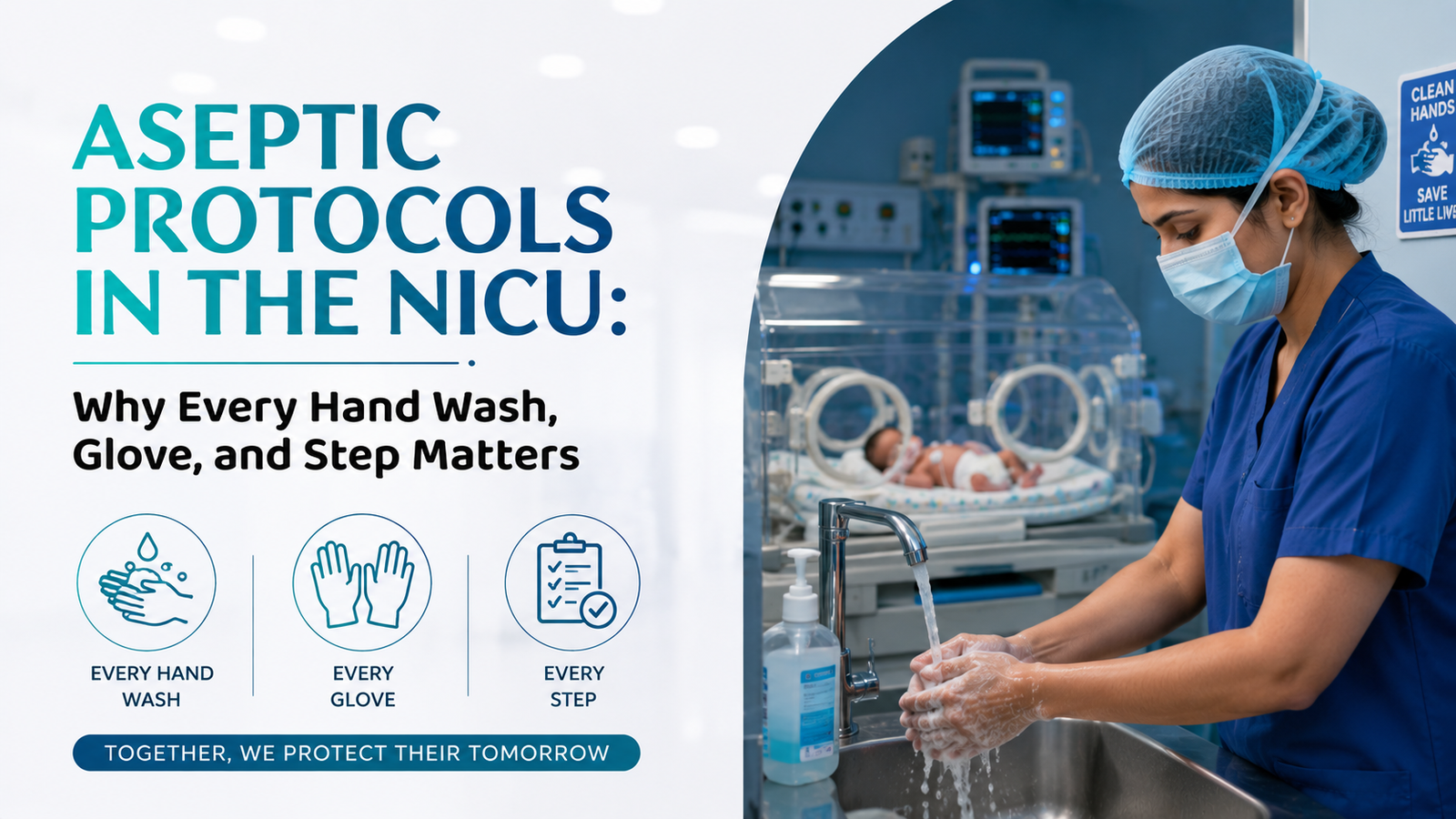
Have you ever noticed how seriously hygiene is taken inside a NICU? From the moment you enter, you’ll see doctors sanitizing their hands, nurses changing gloves between patients, and every piece of equipment being cleaned with great care. These aren’t just hospital routines—they’re part of aseptic protocols, a set of strict infection prevention practices designed to protect the most vulnerable patients in the hospital: newborn babies.
For premature and critically ill babies, even germs that are harmless to healthy adults can cause life-threatening infections. That’s why every hand wash, every sterile glove, and every carefully followed protocol matters. In this blog, let’s understand what aseptic protocols are, why they’re so important in a NICU, and how these small but crucial steps help give newborns the safest possible start in life.
What Are Aseptic Protocols?
“Aseptic” simply means keeping harmful germs away from the baby.
Aseptic protocols are a set of carefully followed practices that reduce the risk of infections during medical care.
These include:
- Proper hand hygiene
- Wearing sterile gloves when required
- Using sterile equipment
- Cleaning medical devices before use
- Maintaining a clean NICU environment
- Following strict infection control guidelines
- Safe handling of IV lines, feeding tubes, and catheters
Every member of the NICU team follows these protocols throughout the day.
Why Are Newborns More Vulnerable to Infections?
Adults have a well-developed immune system that helps fight bacteria and viruses.
Premature babies don’t.
Their immune systems are still developing, making it much harder for them to fight infections on their own.
Some newborns are even more vulnerable because they:
- Are born very early
- Have a low birth weight
- Need breathing support
- Require IV medications
- Have feeding tubes or central lines
- Need prolonged NICU care
That’s why preventing infections is always better than treating them.
Why Is Hand Hygiene Such a Big Deal?
If there’s one rule in every NICU, it’s this:
Clean hands save lives.
Our hands touch countless surfaces every day.
Even when they look clean, they can carry bacteria and viruses.
By washing or sanitizing hands before and after every patient interaction, healthcare professionals dramatically reduce the risk of spreading infections.
It’s one of the simplest yet most effective ways to protect newborns.
Why Do Doctors and Nurses Wear Gloves?
Parents sometimes think gloves replace handwashing.
They don’t.
Healthcare professionals clean their hands before putting gloves on and after removing them.
Gloves provide an extra layer of protection during procedures such as:
- Inserting IV lines
- Changing dressings
- Drawing blood
- Handling sterile equipment
- Caring for surgical wounds
Fresh gloves are used whenever needed to prevent germs from moving from one patient to another.
Every Piece of Equipment Must Be Clean
NICUs use advanced equipment to care for newborns, including:
- Incubators
- Ventilators
- CPAP machines
- Feeding pumps
- Monitors
- Infusion pumps
These devices are cleaned and disinfected according to strict hospital protocols.
Many items that come into direct contact with babies are sterile or single-use whenever appropriate.
Even Visitors Have an Important Role
Parents naturally want to hold and comfort their baby.
And they absolutely should—when it’s safe to do so.
But before entering the NICU, families are usually asked to:
- Wash or sanitize their hands
- Remove jewellery if required
- Avoid visiting when sick
- Wear protective clothing if advised
- Follow NICU hygiene rules
These aren’t restrictions.
They’re another way of protecting the babies inside.
Infection Prevention Is a Team Effort
Preventing infections isn’t just the nurse’s responsibility.
Or the doctor’s.
It’s everyone’s job.
From housekeeping staff maintaining cleanliness…
To biomedical teams ensuring equipment is safe…
To parents following hygiene guidelines…
Every person plays a role in protecting newborns.
What Happens If an Infection Is Suspected?
Despite the best precautions, infections can still occur.
When doctors suspect an infection, they act quickly.
They may:
- Perform blood tests
- Collect cultures
- Monitor vital signs closely
- Start antibiotics if necessary
- Increase observation in the NICU
Early detection and prompt treatment are essential for achieving the best outcomes.
Small Steps That Make a Big Difference
When parents visit the NICU, they often notice the machines first.
But some of the most important work happens quietly.
A nurse sanitizing her hands.
A doctor changing gloves.
A feeding tube being handled with sterile technique.
An incubator being disinfected.
These small actions may seem routine, but together, they create one of the safest possible environments for vulnerable newborns.
The Vrundavan Approach
At Vrundavan Newborn & Childcare Centre, infection prevention is a core part of neonatal care. Strict aseptic protocols, evidence-based infection control practices, meticulous hand hygiene, sterile techniques, and continuous staff training help create a safe environment for premature and critically ill newborns. Every precaution is taken because protecting babies from infection is just as important as treating their medical condition.
Final Thoughts
Parents often see hand sanitizers, gloves, masks, and strict hygiene rules as hospital routines.
In reality, they’re acts of protection.
Every hand wash.
Every sterile glove.
Every cleaned piece of equipment.
Every protocol followed.
Together, they help give newborns something they need most—a safer start to life.
Frequently Asked Questions (FAQs)
1. What are aseptic protocols in the NICU?
Aseptic protocols are infection prevention practices such as hand hygiene, sterile procedures, equipment disinfection, and proper use of protective gear to keep newborns safe from harmful germs.
2. Why are premature babies at a higher risk of infection?
Premature babies have immature immune systems, making it harder for them to fight bacteria and viruses.
3. Why is hand hygiene so important in the NICU?
Hand hygiene is one of the most effective ways to prevent infections from spreading between healthcare providers, parents, and babies.
4. Can parents visit their baby if they have a cold?
It’s generally advised to avoid visiting the NICU when you’re unwell, as even common infections can pose a risk to vulnerable newborns.
5. How does the NICU prevent infections?
NICUs follow strict infection control measures, including aseptic techniques, sterilized equipment, hand hygiene, environmental cleaning, and continuous monitoring for signs of infection.