Newborn Screening Programs: Why Early Testing Matters
There’s something unforgettable about meeting your baby for the first time.
You count tiny fingers, notice every expression, and quietly wonder if everything is okay. While parents are soaking in those first moments, hospitals and neonatal teams are doing something equally important behind the scenes—making sure your baby gets the healthiest possible start. One of the most important parts of early newborn care is newborn screening.
It’s quick, safe, and often completed before you leave the hospital. Most importantly, it helps identify certain medical conditions early—even before symptoms appear. And in newborn care, early detection can make a lifelong difference.
What Is a Newborn Screening Program?
A newborn screening program is a preventive health screening done shortly after birth to identify certain serious but treatable medical conditions.
The purpose is simple: detect health concerns before they begin affecting your baby’s growth and development.
Many screened conditions are not visible immediately after birth. Babies may appear healthy while underlying concerns remain unnoticed.
Screening allows doctors to identify those conditions early and begin treatment if needed.
Newborn screening may include evaluation for:
- Metabolic conditions
- Hormonal disorders
- Blood-related conditions
- Genetic disorders
- Hearing concerns
- Heart-related abnormalities
This approach helps support better health outcomes and early medical intervention.
Why Is Newborn Screening Important?
Newborns cannot tell us when something feels wrong.
Many conditions develop silently in the early days of life and may only become noticeable once symptoms appear.
By then, treatment opportunities may become more limited.
Newborn screening shifts the focus from reacting to symptoms to preventing complications before they happen.
Early screening can help:
- Support healthy growth and development
- Reduce long-term health complications
- Improve treatment outcomes
- Enable timely medical decisions
- Give parents clarity and reassurance
For many families, this small step becomes one of the most valuable parts of newborn care.
What Conditions Can Newborn Screening Detect?
The exact screening panel may vary depending on hospital protocols and healthcare guidelines, but common conditions include:
Congenital Hypothyroidism
A condition where the thyroid gland does not produce enough hormones required for healthy growth and brain development.
G6PD Deficiency
A blood-related condition that may increase sensitivity to certain triggers and contribute to newborn jaundice.
Phenylketonuria (PKU)
A metabolic disorder that affects how the body processes proteins.
Congenital Adrenal Hyperplasia (CAH)
A hormonal condition that may influence growth and body salt regulation.
Sickle Cell Disease and Blood Disorders
Conditions affecting oxygen delivery and red blood cell function.
Hearing Loss
Early identification supports speech, language, and communication development.
Critical Congenital Heart Disease (CCHD)
A screening process that helps detect serious heart conditions early.
What Happens During Newborn Screening?
Parents are often relieved to learn that newborn screening is generally simple and quick.
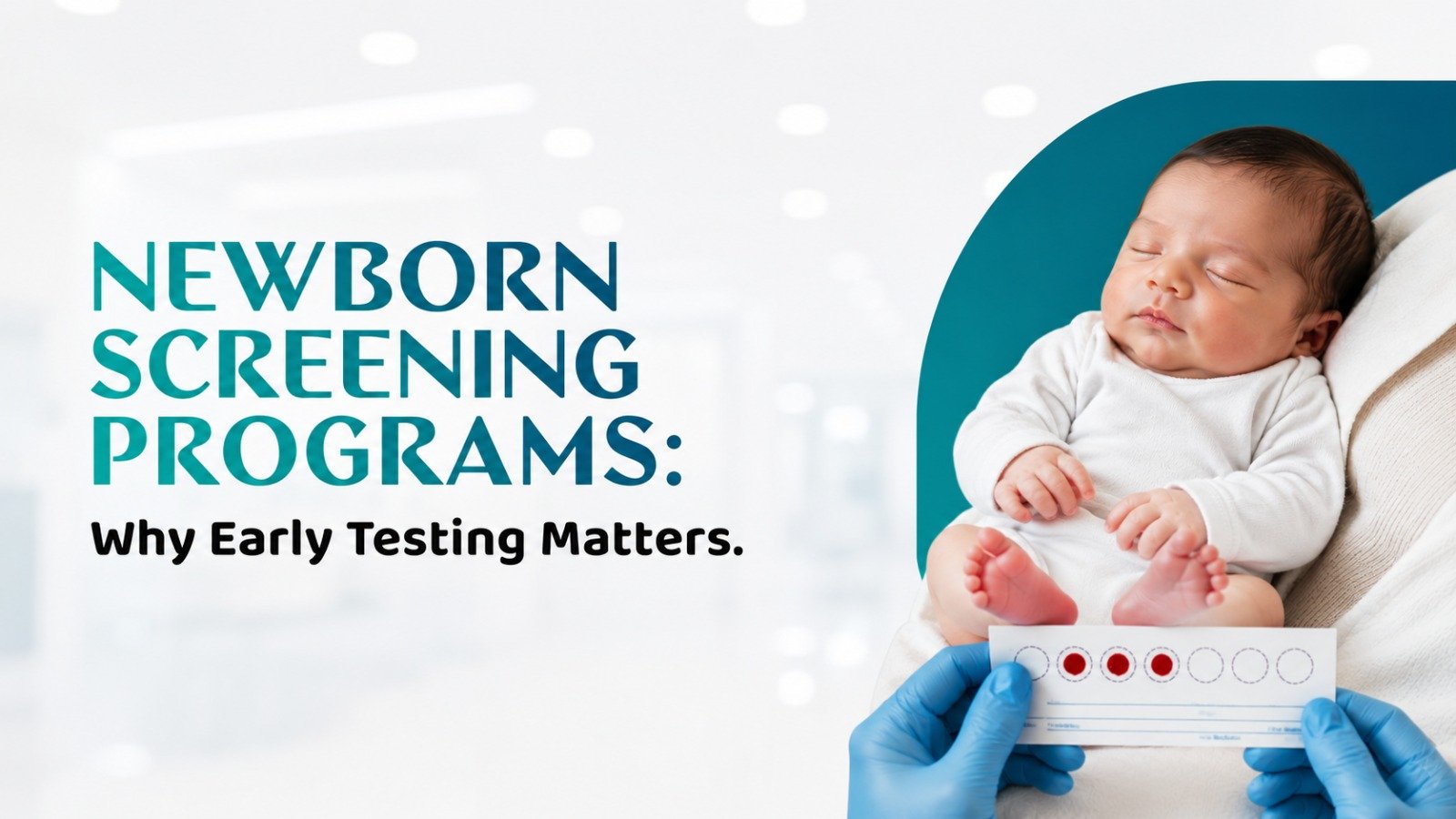
Heel Prick Test
A few drops of blood are collected from your baby’s heel and sent for laboratory analysis.
Hearing Screening
Specialised equipment checks your baby’s hearing response.
Pulse Oximetry Screening
A small sensor measures oxygen levels and helps identify certain heart-related concerns.
Most babies remain calm or sleep during the process.
Does Newborn Screening Hurt?
The heel prick may cause brief discomfort, but the procedure is short.
Hospitals often recommend:
- Skin-to-skin contact
- Feeding during screening
- Gentle swaddling
These measures help comfort newborns during testing.
What If Screening Results Are Abnormal?
An abnormal screening result does not automatically mean your baby has a medical condition.
Screening is designed to identify babies who may need further evaluation.
Sometimes additional testing confirms that everything is normal.
If follow-up is needed, your healthcare team will explain the next steps and provide guidance.
Early screening simply gives families the advantage of acting sooner when necessary.
Should Every Baby Get Newborn Screening?
In most situations, yes.
Newborn screening is recommended for:
- Full-term babies
- Premature babies
- Babies born through C-section
- Babies receiving NICU care
- Healthy newborns with no visible symptoms
Every newborn deserves the opportunity for early detection and timely care.
Questions Parents Can Ask Before Hospital Discharge
Before taking your baby home, consider asking:
- Has newborn screening been completed?
- Which conditions were included?
- When will results be available?
- Will follow-up be required?
- Are additional screenings recommended?
These conversations can help parents feel more informed and confident.
Final Thoughts
Parenthood begins with countless decisions, and many of them happen sooner than expected.
Newborn screening may seem like a small part of your baby’s first days—but its impact can be significant.
A quick test today can support early treatment, informed decisions, and healthier outcomes tomorrow.
Because when it comes to newborn care, finding concerns early often creates the best chance for a healthy start.