
One-to-One Nursing Ratio in a NICU: Why It Can Make All the Difference for Your Baby
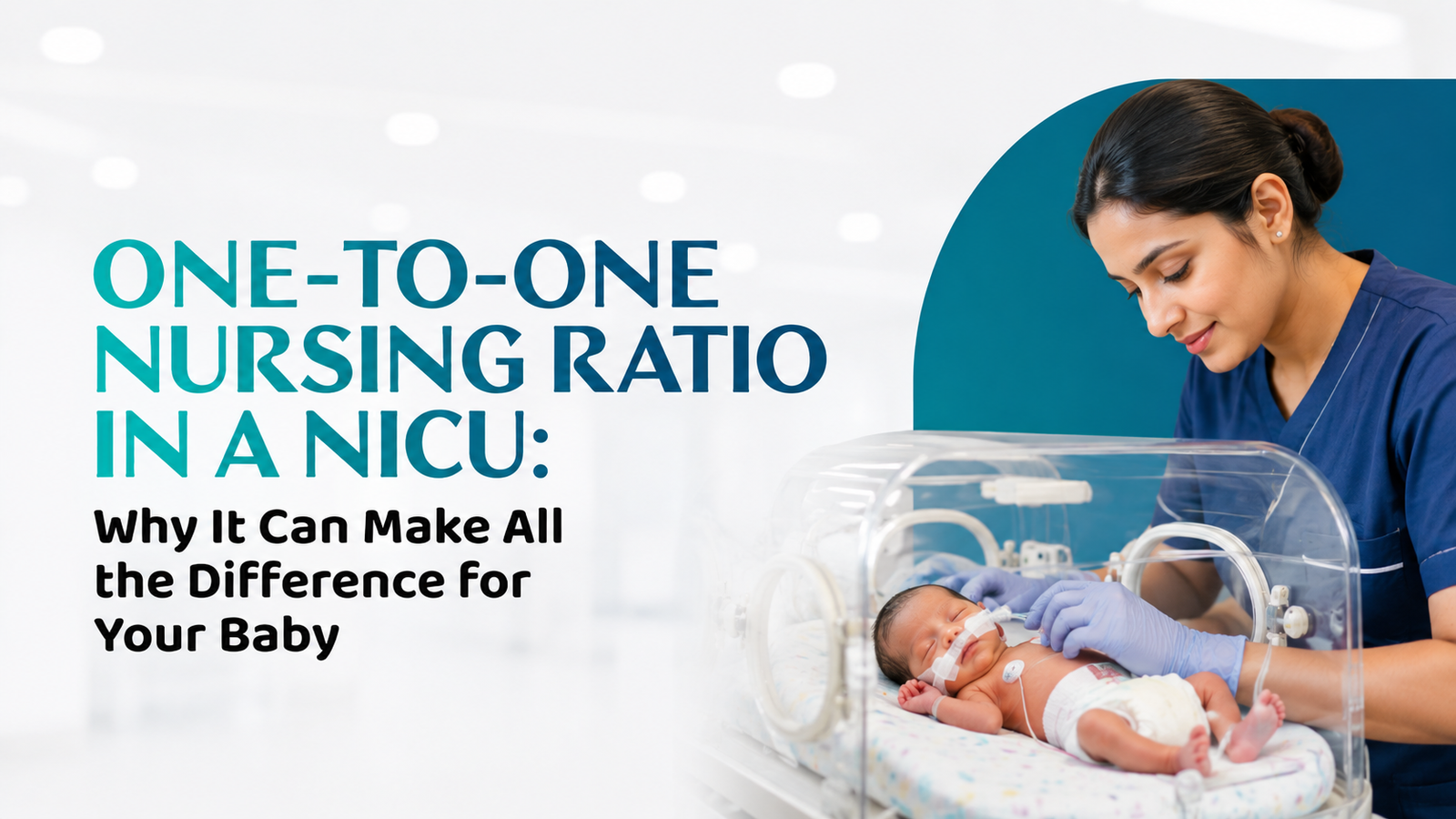
If you’ve ever stepped inside a NICU, you’ve probably noticed something immediately.
The room is filled with monitors, incubators, gentle beeping sounds, and healthcare professionals moving with incredible focus.
But behind all that technology is something even more important—a highly trained NICU nurse.
Many parents ask,
“Why does my baby need a nurse all the time?”
It’s a fair question.
The answer is actually quite simple.
Some babies need constant attention because even the smallest change in their condition can happen within seconds.
That’s where a one-to-one nursing ratio becomes invaluable.
What Does One-to-One Nursing Ratio Mean?
A one-to-one nursing ratio means that one NICU nurse is dedicated to caring for one critically ill newborn at a time.
Instead of dividing attention between multiple babies, the nurse continuously observes, monitors, and responds to that one baby’s needs.
Think of it this way.
Imagine driving through heavy rain.
Would you rather have one person watching only your car, or someone trying to monitor five cars at once?
Your newborn deserves the same focused attention.
Why Do Some Babies Need One-to-One Care?
Not every baby admitted to a NICU requires one-to-one nursing.
However, babies with complex medical conditions often do.
This includes babies who:
- Are born extremely premature
- Need ventilator support
- Have severe breathing difficulty
- Are recovering after surgery
- Have serious infections
- Require multiple medications through IV lines
- Need continuous monitoring of vital signs
- Have unstable heart rate or oxygen levels
These babies can become unstable very quickly.
Having one dedicated nurse allows immediate recognition of even the slightest change.
Every Second Matters in Neonatal Care
Newborns, especially premature babies, cannot tell us when something feels wrong.
Instead, their bodies communicate through tiny changes.
A slight drop in oxygen.
A change in breathing pattern.
An abnormal heart rate.
A temperature fluctuation.
To an untrained eye, these changes may seem insignificant.
To an experienced NICU nurse, they are important signals.
Because one nurse is focused on one baby, these changes are noticed almost instantly, allowing the medical team to intervene early before the condition worsens.
Beyond Monitoring: What Does a NICU Nurse Actually Do?
Many parents believe nurses simply check monitors.
In reality, they do so much more.
A NICU nurse continuously:
- Assesses breathing
- Monitors heart rate
- Checks oxygen saturation
- Administers medications
- Adjusts ventilator settings (under medical guidance)
- Feeds the baby safely
- Prevents infections
- Maintains body temperature
- Supports developmental care
- Comforts the baby during procedures
- Educates parents
- Coordinates with neonatologists and therapists
In many ways, they become the baby’s closest guardian throughout the NICU stay.
One-to-One Nursing Helps Reduce Complications
Early detection leads to early treatment.
This can help reduce the risk of complications such as:
- Sudden breathing problems
- Severe infections
- Feeding intolerance
- Temperature instability
- Oxygen fluctuations
- Circulatory problems
When changes are identified quickly, treatment can begin sooner, often improving recovery.
Parents Benefit Too
One-to-one nursing isn’t only beneficial for babies.
It also supports families.
Parents often feel overwhelmed in the NICU.
Having a dedicated nurse means there’s someone who:
- Explains what’s happening
- Answers questions patiently
- Guides parents through the NICU journey
- Teaches safe newborn handling
- Encourages Kangaroo Mother Care when appropriate
- Provides reassurance during difficult moments
Sometimes, what parents need most is someone who can simply say,
“Your baby is stable right now, and here’s what’s happening.”
That conversation can make an incredibly stressful day feel a little easier.
Does Every NICU Follow One-to-One Nursing?
Not always.
The nursing ratio depends on:
- Baby’s medical condition
- Level of NICU
- Severity of illness
- Hospital protocols
- Staffing standards
Stable babies may have one nurse caring for two or more infants, while critically ill newborns often require exclusive nursing care.
The goal is always to provide the safest and most appropriate level of attention.
Technology Is Important-But It Doesn't Replace Nurses
Modern NICUs have advanced monitors, ventilators, infusion pumps, and incubators.
These machines provide valuable information.
But machines don’t make clinical decisions.
They don’t comfort babies.
They don’t recognize subtle behavioural changes before an alarm sounds.
Experienced NICU nurses combine technology with clinical judgment, compassion, and years of specialised neonatal training.
That human expertise cannot be replaced.
Choosing a NICU? Ask About the Nursing Ratio
When selecting a NICU, parents often ask about equipment.
That’s important.
But don’t forget to ask about the people behind the equipment.
Questions you can ask include:
- What is the nurse-to-baby ratio?
- Are nurses specially trained in neonatal intensive care?
- How are critically ill babies monitored?
- Can parents communicate with the nursing team?
- How often are babies assessed?
These answers provide valuable insight into the quality of care your baby will receive.
The Vrundavan Approach
At Vrundavan Newborn & Childcare Centre, neonatal care is built around preparedness, evidence-based medicine, compassionate care, and continuous monitoring.
For babies requiring intensive support, focused nursing care helps ensure that even the smallest clinical changes are recognised promptly, allowing the medical team to respond quickly while keeping parents informed throughout the journey.
Final Thoughts
Parents often remember the machines in the NICU.
But what they remember even more are the people standing beside those machines.
A dedicated NICU nurse isn’t simply monitoring numbers on a screen.
They’re protecting tiny lives, noticing the smallest changes, supporting anxious parents, and working tirelessly alongside neonatologists to give every newborn the strongest possible start.
Sometimes, the greatest technology in a NICU isn’t a machine at all.
It’s the undivided attention of someone who knows exactly what to look for.
Frequently Asked Questions (FAQs)
- What is a one-to-one nursing ratio in a NICU?
It means one specially trained NICU nurse is assigned to care for one critically ill newborn, allowing continuous monitoring and rapid response to changes. - Which babies need one-to-one nursing care?
Babies who are extremely premature, critically ill, on ventilators, recovering from surgery, or medically unstable often require one-to-one nursing. - Does every baby in the NICU receive one-to-one nursing?
No. The nursing ratio depends on the baby’s condition and the level of care required. - Why is continuous monitoring important in the NICU?
Newborns can deteriorate quickly. Continuous observation helps identify problems early and allows prompt treatment. - Can parents talk to the NICU nurse caring for their baby?
Yes. NICU nurses play an important role in educating, supporting, and communicating with parents throughout their baby’s stay.