
The NICU Journey of a 25-Week, 735-Gram Preterm Baby
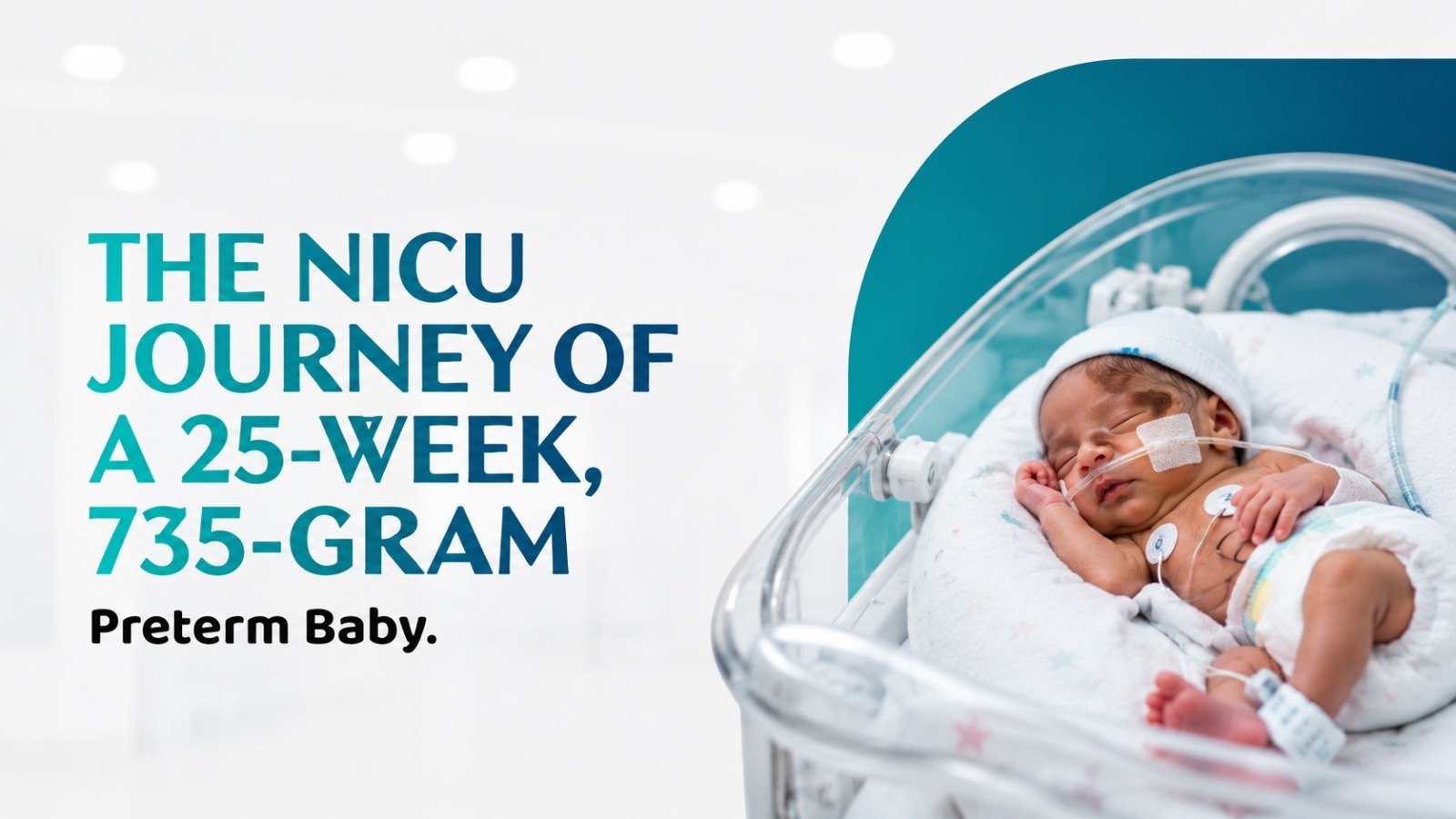
Some stories remind us that strength isn’t measured by size. Sometimes, it weighs just 735 grams.
When a baby arrives at only 25 weeks of pregnancy, life begins much earlier than expected. Instead of spending precious weeks growing safely inside the womb, every organ now has to continue developing with the support of an experienced neonatal intensive care team.
For parents, it can be one of the most emotional journeys they’ll ever experience—filled with uncertainty, hope, setbacks, and tiny victories that mean the world.
This case study shares the journey of one such extremely preterm baby and highlights how timely intervention, advanced NICU care, and unwavering family support made every milestone possible.
Note: To protect patient privacy, identifying details have been modified while preserving the clinical learning points.
The Case at a Glance
Gestational Age: 25 weeks
Birth Weight: 735 grams
Category: Extremely preterm, Extremely Low Birth Weight (ELBW)
Initial Condition:
- Severe prematurity
- Very low birth weight
- Underdeveloped lungs
- Difficulty maintaining body temperature
- Feeding immaturity
- High risk of infections and other prematurity-related complications
From the very beginning, every hour mattered.
The Challenges of Being Born at 25 Weeks
A baby born at 25 weeks has not yet completed many critical stages of development.
The lungs are still maturing. The digestive system is delicate. The immune system is underdeveloped. Even maintaining body temperature independently can be difficult.
Babies born this early often require specialised neonatal care to support breathing, nutrition, growth, and protection from infections while allowing their organs to continue developing outside the womb.
The First Few Days in the NICU
Immediately after birth, the neonatal team focused on stabilising the baby.
Care priorities included:
- Respiratory support
- Temperature regulation using a neonatal incubator
- Careful fluid management
- Continuous heart rate and oxygen monitoring
- Infection prevention
- Gentle handling to minimise stress
Every treatment decision was carefully planned based on the baby’s condition and response.
Nutrition: Every Millilitre Counts
For extremely preterm babies, nutrition is one of the biggest milestones.
Initially, babies may require specialised intravenous nutrition while the digestive system matures.
As tolerated, small quantities of breast milk are introduced gradually.
Each successful feed represents progress—not just in weight gain, but in overall development.
In this baby’s journey, nutrition became one of the strongest building blocks for recovery.
Watching Growth One Gram at a Time
Unlike healthy full-term babies, progress in extremely premature infants isn’t measured only in weeks.
Sometimes it’s measured in grams.
Small milestones became major celebrations:
- Improved breathing support
- Better feeding tolerance
- Gradual weight gain
- Stable body temperature
- Reduced dependence on intensive respiratory assistance
- Increased activity and responsiveness
Every gain reflected the combined efforts of the neonatal team and the baby’s remarkable resilience.
The Role of Parents
Although much of the medical care happens inside the NICU, parents remain an essential part of the healing journey.
The family was encouraged to participate through:
- Kangaroo Mother Care (when medically appropriate)
- Breast milk expression
- Gentle bonding
- Regular communication with the NICU team
- Emotional support for the baby’s recovery
These moments helped strengthen not only the baby’s development but also the family’s confidence.
A Journey of Patience
Recovery for extremely premature babies rarely follows a straight path.
Some days bring exciting progress.
Others require adjustments in treatment or closer observation.
What remained constant throughout this baby’s journey was the commitment to providing evidence-based neonatal care, continuous monitoring, and personalised treatment at every stage.
A Hopeful Outcome
After weeks of dedicated NICU care, careful monitoring, nutritional support, and steady progress, the baby reached important developmental milestones that made discharge possible.
Going home marked the beginning of a new chapter—not the end of the journey.
Regular follow-up visits, developmental assessments, nutritional guidance, and continued family support remain essential for babies born extremely premature.
Today, this story stands as a reminder that with timely medical care, advanced neonatal expertise, and extraordinary determination, even the tiniest fighters can overcome incredible challenges.
What This Case Teaches Us
Every premature baby has a unique journey. While outcomes vary depending on several medical factors, this case highlights the importance of:
- Early specialised neonatal care
- Experienced NICU support
- Timely respiratory management
- Adequate nutrition
- Infection prevention
- Family-centred care
- Regular developmental follow-up
Together, these elements create the best possible environment for premature babies to grow and thrive.
Final Thoughts
A birth weight of 735 grams may seem impossibly small.
But behind that number is a story of resilience, medical expertise, and hope.
Every monitor, every carefully planned feed, every sleepless night in the NICU, and every encouraging conversation between doctors and parents contributes to something much bigger—a chance at a healthy future.
For families walking a similar path today, know this: every gram gained, every breath strengthened, and every milestone achieved is a step worth celebrating.