
Transient Tachypnea of the Newborn: When Your Baby Is Breathing Too Fast
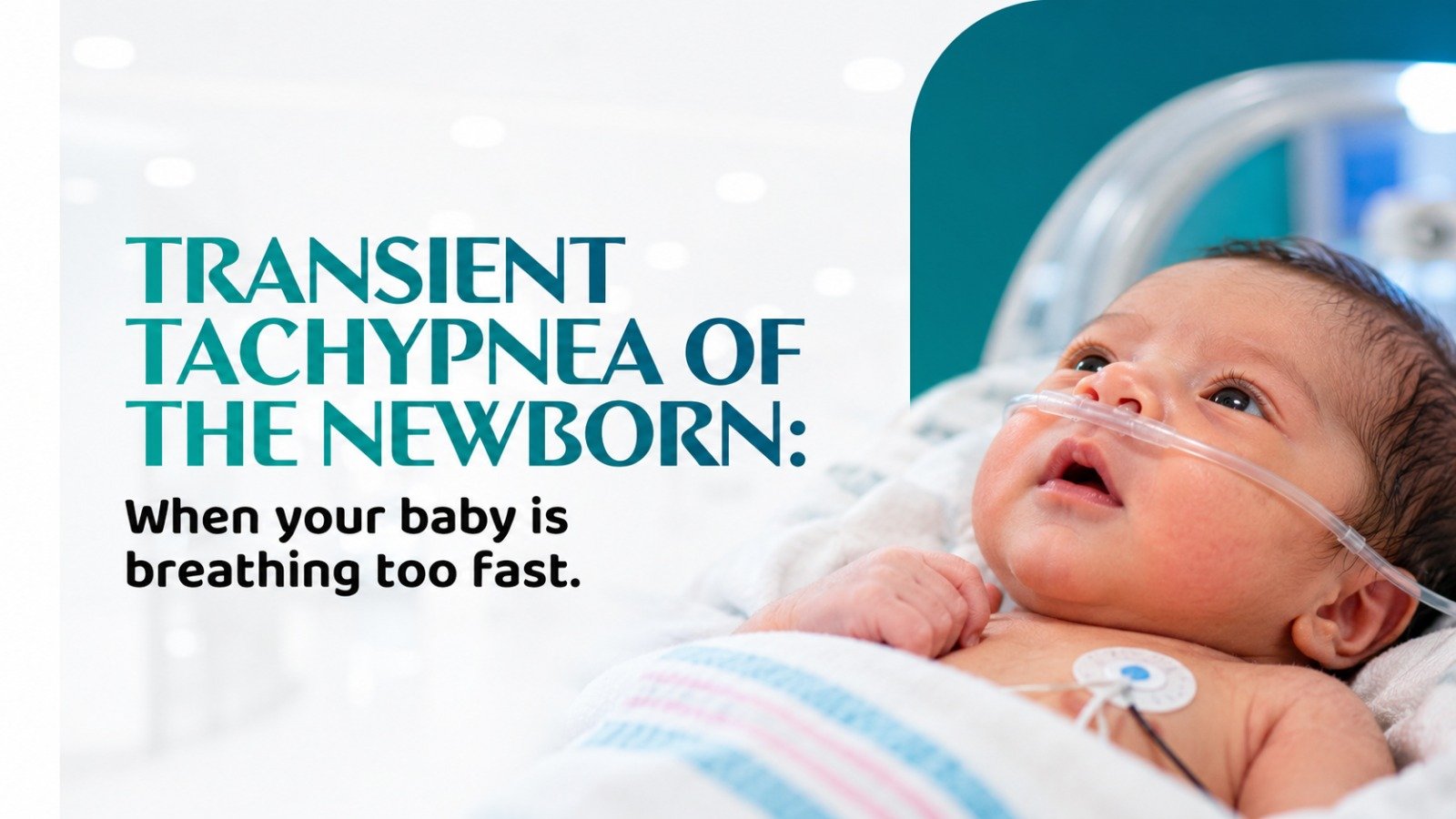
“My baby is breathing very fast. Is something seriously wrong?”
It is a scary thing for any parent to notice.
Fast breathing in a newborn should never be ignored—but it does not always mean a serious or long-term lung problem.
One possible reason is Transient Tachypnea of the Newborn (TTN), a temporary breathing condition that usually improves as the baby’s lungs adjust after birth.
What Is Transient Tachypnea of the Newborn?
Transient tachypnea means temporary rapid breathing in a newborn.
Before birth, a baby’s lungs contain fluid. During the transition to life outside the womb, much of this fluid needs to be cleared so the lungs can work efficiently.
Sometimes, the fluid takes longer to clear.
The result can be rapid breathing shortly after birth, commonly referred to as TTN or “wet lung” of the newborn.
The important word is transient.
For many babies, the breathing difficulty improves within a relatively short period with appropriate monitoring and supportive care.
What Does Fast Breathing Look Like in a Newborn?
A newborn normally breathes faster than an older child or adult, but persistent breathing above the expected range can be a warning sign.
Parents and healthcare professionals may notice:
- Rapid breathing
- Grunting sounds
- Flaring of the nostrils
- Chest retractions, where the skin pulls in between or under the ribs
- Difficulty maintaining oxygen levels
- Trouble feeding because the baby is breathing too quickly
These signs can overlap with other newborn breathing problems, which is why rapid breathing in a newborn needs medical assessment.
Why Does TTN Happen?
TTN occurs when lung fluid is not cleared as quickly as expected after birth.
It can be more commonly seen in certain situations, including babies born by caesarean delivery, particularly when labour has not occurred.
Other factors can also increase the likelihood, including being born early and certain maternal or newborn conditions.
But having a risk factor does not mean a baby will definitely develop TTN.
How Is TTN Diagnosed?
There is no single test that confirms every case of TTN.
Doctors consider the baby’s breathing pattern, oxygen levels, examination findings and overall condition.
Depending on the situation, the medical team may recommend tests such as a chest X-ray, blood tests or blood gas analysis.
These investigations can also help doctors distinguish TTN from other causes of newborn respiratory distress, such as respiratory distress syndrome, infection or other lung and heart conditions.
Does a Baby With TTN Need NICU Care?
Sometimes.
If a newborn is breathing rapidly or requires oxygen, close observation may be necessary.
In a neonatal intensive care unit, the baby can be continuously monitored for breathing, oxygen saturation, heart rate and temperature.
Some babies may need supplemental oxygen or other forms of respiratory support, depending on the severity of their symptoms.
Feeding may also need temporary adjustment if rapid breathing makes it unsafe or difficult for the baby to feed normally.
How Long Does TTN Last?
The condition is called “transient” because it generally improves as the baby’s lungs clear the remaining fluid.
However, every newborn is different.
If breathing difficulty persists, doctors will look for other possible causes rather than assuming that the problem is simply TTN.
That is why newborn respiratory distress should always be assessed by a qualified neonatal team.
Is TTN Dangerous?
In many cases, TTN is a temporary condition with a good outcome.
But fast breathing in a newborn should never be self-diagnosed at home.
Newborns can develop breathing problems for many different reasons, and some require urgent treatment.
The safest approach is simple:
If your newborn is breathing unusually fast, struggling to breathe, turning blue, grunting, or having difficulty feeding, seek immediate medical attention.
A Message for Parents
Seeing your newborn connected to monitors or receiving oxygen can be frightening.
But remember-monitoring does not automatically mean the worst.
Sometimes, a baby’s lungs simply need a little extra time and support to make the transition from the womb to the outside world.
With careful observation, timely treatment and appropriate neonatal care, many babies with TTN recover well.
Tiny lungs. A huge transition. Sometimes, they just need a little more time.