What Is a NICU Warmer? Why Do Newborn Babies Need It?
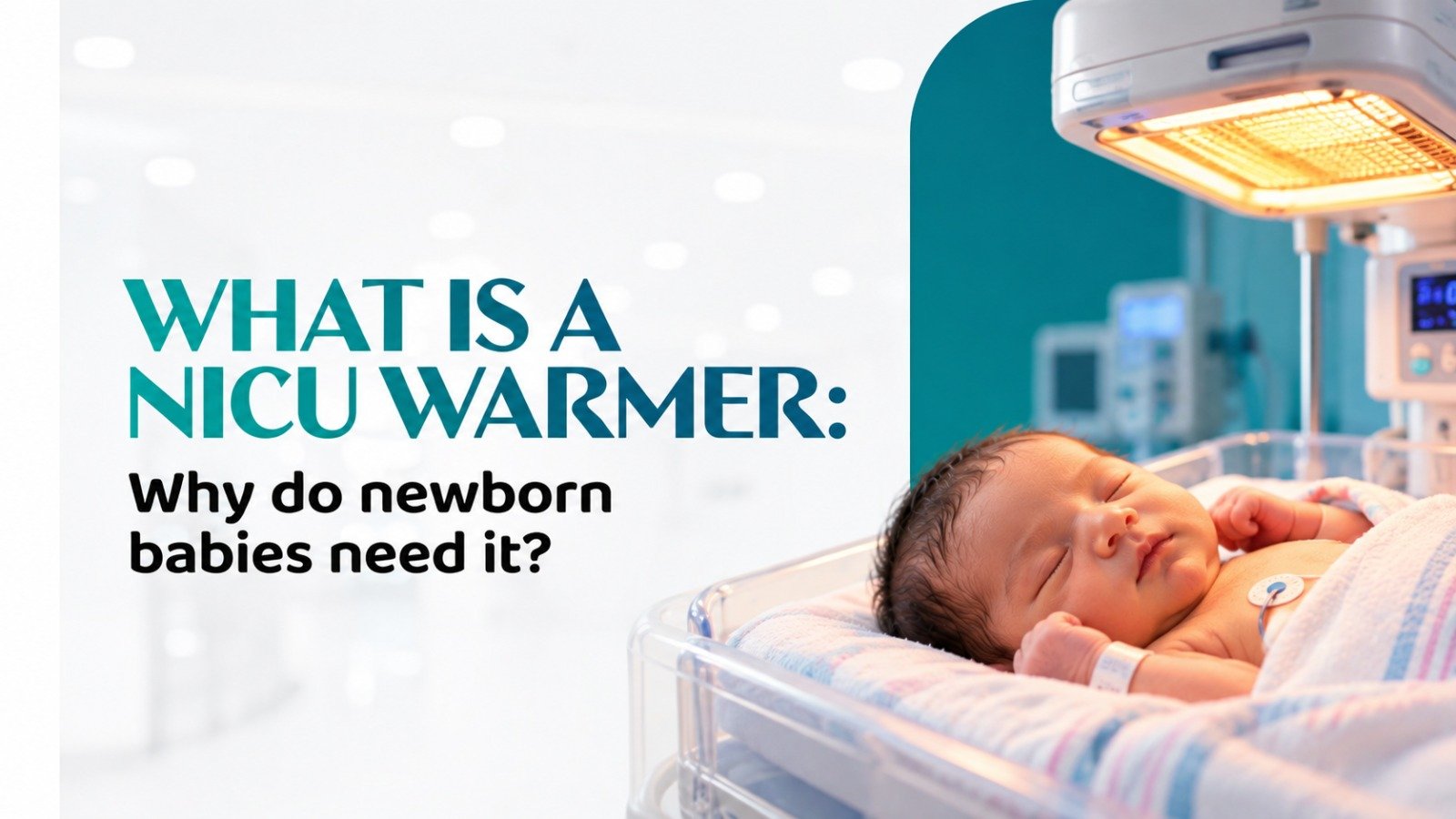
You walk into the NICU and see your tiny baby lying under a bright, warm light.
And naturally, the first question comes:
“Why is my baby under this machine?”
That machine is often a NICU warmer, also called a radiant warmer. It may look intimidating, but its purpose is simple: to help a newborn maintain a safe body temperature while doctors and nurses provide the care the baby needs.
What Is a NICU Warmer?
A NICU warmer is a specialised neonatal device that provides controlled heat to a newborn.
Unlike older children and adults, newborn babies—especially premature babies and low birth weight babies-can lose body heat quickly.
A warmer helps maintain the baby’s temperature within a safe range while allowing healthcare professionals easy access to the baby.
This is particularly useful when a newborn needs examinations, monitoring, procedures or immediate medical treatment.
Why Can’t Newborn Babies Maintain Their Temperature?
A newborn’s body is still learning how to regulate temperature.
Premature babies have even less body fat and immature temperature-control mechanisms. Their small bodies can lose heat through the skin much faster than an adult’s.
This is why temperature regulation in newborns is an important part of neonatal care.
Too much heat loss can increase the baby’s energy and oxygen requirements. Maintaining an appropriate temperature helps reduce unnecessary stress on the newborn.
How Does a Radiant Warmer Work?
A radiant warmer for newborns uses a controlled heat source positioned above the baby.
A temperature sensor can monitor the baby’s skin temperature, allowing the warmer to adjust the amount of heat delivered in servo-controlled modes.
The goal isn’t simply to make the baby “warm.”
The goal is to maintain a stable and appropriate temperature.
That distinction matters.
Which Babies May Need a NICU Warmer?
A newborn may be placed under a warmer for several reasons, including:
- Prematurity
- Low birth weight
- Difficulty maintaining body temperature
- Respiratory problems
- Infection or suspected infection
- Following certain procedures
- During initial stabilisation after birth
- When close monitoring is required
Sometimes, a baby may only need a warmer temporarily.
Other babies may require more prolonged NICU temperature management, depending on their medical condition.
Is a NICU Warmer the Same as an Incubator?
Not exactly.
Both provide a controlled environment for newborns, but they work differently.
A neonatal incubator is an enclosed environment that helps regulate temperature and humidity around the baby.
A radiant warmer provides heat from above and leaves the baby more accessible to doctors and nurses.
The choice depends on the baby’s condition and what kind of care is required.
Does Being Under a Warmer Mean My Baby Is Seriously Ill?
Not necessarily.
Seeing your baby under a warmer can be frightening, but the equipment itself does not tell you how serious the baby’s condition is.
A warmer may be used simply because a newborn is struggling to maintain body temperature or because the medical team needs easy access while monitoring the baby.
The baby’s overall condition, diagnosis, breathing, circulation, feeding and response to treatment are much more important than the presence of a warmer alone.
Why Is Temperature So Important in NICU Care?
For a newborn, temperature is not just about comfort.
It is part of neonatal monitoring.
The medical team continuously considers temperature along with breathing, heart rate, oxygen levels, blood sugar, feeding and other vital parameters.
That is why keeping a premature or sick newborn warm is an important part of newborn intensive care.
A Little Machine With a Big Purpose
The next time you see your tiny baby under a NICU warmer, remember what it represents.
Warmth. Monitoring. Protection. Support.
It is not there to replace your touch or your presence.
It is there to give your baby’s body the stable environment it may need while the medical team focuses on recovery.
And when your baby is ready, the goal is always to gradually move toward maintaining temperature independently.
Because every step toward going home starts with helping a newborn become stronger-one stable breath, one feed and one milestone at a time.