
What Is PDA in Children? Understanding Patent Ductus Arteriosus (PDA) in Simple Terms
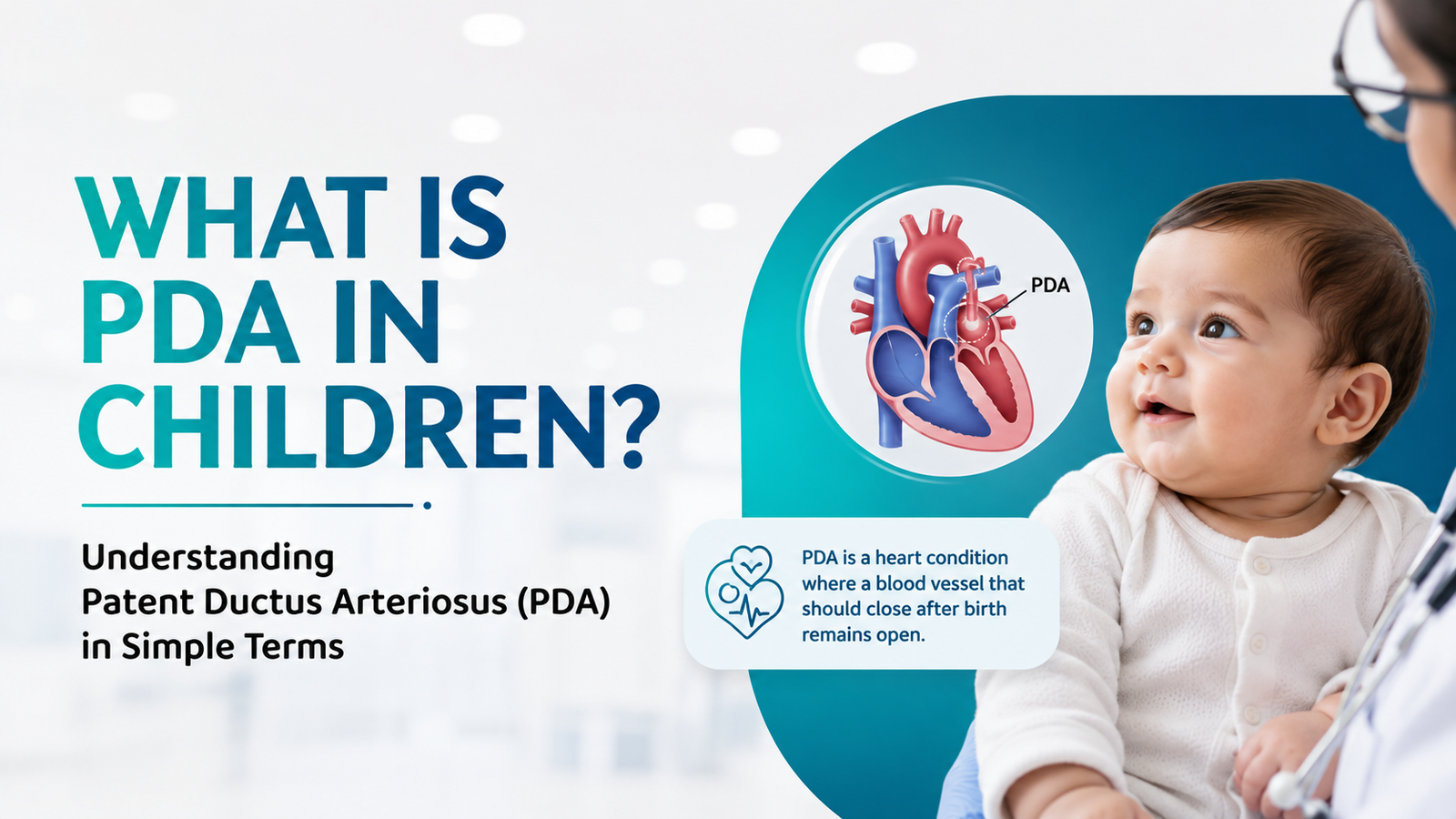
Hearing your doctor say, “Your baby has PDA,” can instantly fill your mind with questions. Is it serious? Will my child need surgery? Will they be okay?
The good news is that Patent Ductus Arteriosus (PDA) is a common congenital heart condition, especially in premature babies, and modern medicine offers highly effective treatments. Many children with PDA go on to live completely healthy, active lives after appropriate care.
Let’s understand what PDA is, why it happens, the symptoms parents should watch for, and how doctors treat it all in simple language.
For premature and critically ill babies, even germs that are harmless to healthy adults can cause life-threatening infections. That’s why every hand wash, every sterile glove, and every carefully followed protocol matters. In this blog, let’s understand what aseptic protocols are, why they’re so important in a NICU, and how these small but crucial steps help give newborns the safest possible start in life.
First, Let's Understand How a Baby's Heart Works Before Birth
While a baby is growing inside the womb, the lungs aren’t being used to breathe.
Instead, oxygen comes from the mother’s placenta.
Because the lungs aren’t working yet, nature creates a temporary blood vessel called the ductus arteriosus.
Think of it as a shortcut that allows blood to bypass the lungs.
Once the baby is born and takes the first breath, the lungs begin working, and this blood vessel is no longer needed.
In most babies, it closes naturally within the first few days after birth.
What Exactly Is Patent Ductus Arteriosus (PDA)?
Sometimes, this temporary blood vessel doesn’t close.
When it remains open after birth, it’s called Patent Ductus Arteriosus (PDA).
“Patent” simply means open.
When the ductus arteriosus stays open, extra blood flows from the body’s main artery (the aorta) into the artery that carries blood to the lungs (the pulmonary artery).
This causes the heart and lungs to work harder than they should.
The impact depends on the size of the PDA.
A small PDA may cause no symptoms at all, while a larger PDA may require treatment.
Why Does PDA Happen?
In many babies, especially those born prematurely, the ductus arteriosus simply takes longer to close.
Doctors don’t always know the exact reason, but certain babies are more likely to develop PDA.
Risk factors include:
- Premature birth
- Low birth weight
- Respiratory distress after birth
- Certain genetic conditions
- Family history of congenital heart disease
- Babies born at high altitude (less common)
Prematurity is the biggest risk factor because the baby’s heart and blood vessels are still developing.
What Are the Symptoms of PDA?
The symptoms depend on whether the PDA is small or large.
A Small PDA
Many babies with a small PDA appear completely healthy.
Often, it’s discovered only when a doctor hears a heart murmur during a routine examination.
A Larger PDA
A larger PDA may cause symptoms such as:
- Fast breathing
- Difficulty feeding
- Poor weight gain
- Sweating during feeds
- Frequent chest infections
- Tiring easily while feeding
- Increased heart rate
- Poor growth
Because feeding is a form of exercise for newborns, babies with PDA may become exhausted during feeds.
How Is PDA Diagnosed?
If a pediatrician or neonatologist suspects PDA, several tests may be recommended.
Physical Examination
Doctors may hear a characteristic heart murmur using a stethoscope.
Echocardiography (2D Echo)
This is the most important test.
It uses ultrasound waves to create images of the baby’s heart and confirms:
- Whether PDA is present
- Its size
- The direction of blood flow
- Its effect on the heart
Other Tests
Depending on the baby’s condition, doctors may also recommend:
- Chest X-ray
- ECG (Electrocardiogram)
- Oxygen monitoring
Does Every PDA Need Treatment?
No.
This surprises many parents.
A small PDA may close on its own without any treatment.
Doctors often monitor these babies with regular follow-up visits and echocardiograms.
Treatment depends on:
- Baby’s age
- Baby’s weight
- Size of the PDA
- Symptoms
- Effect on the heart and lungs
How Is PDA Treated?
Treatment is individualized for every child.
1. Observation
If the PDA is small and not causing problems, doctors may simply monitor it over time.
Many close naturally.
2. Medicines
In premature babies, certain medications may help encourage the ductus arteriosus to close.
These medicines are usually effective when given early under careful medical supervision.
3. Catheter-Based Closure
For many older infants and children, PDA can be closed without open-heart surgery.
A thin tube called a catheter is inserted through a blood vessel, and a tiny device is used to close the PDA.
Most children recover quickly after this minimally invasive procedure.
4. Surgery
If the PDA is very large or catheter closure isn’t suitable, surgery may be recommended.
Modern pediatric cardiac surgery is highly successful, and outcomes are generally excellent.
What Happens If PDA Is Left Untreated?
A large untreated PDA may eventually lead to complications such as:
- Heart enlargement
- Heart failure
- High blood pressure in the lungs (pulmonary hypertension)
- Poor growth
- Recurrent lung infections
Fortunately, early diagnosis and timely treatment significantly reduce these risks.
Can Children Live a Normal Life After PDA Treatment?
Absolutely.
This is one of the most reassuring things parents can hear.
Most children who receive appropriate treatment recover well and grow up to lead normal, healthy, active lives.
Regular follow-up with a pediatric cardiologist ensures everything continues to progress normally.
When Should Parents See a Doctor?
Seek medical advice if your baby:
- Breathes rapidly while resting
- Tires easily during feeding
- Isn’t gaining weight well
- Sweats excessively while feeding
- Has frequent chest infections
- Appears unusually sleepy or lethargic
While these symptoms don’t always mean PDA, they should never be ignored.
Early evaluation leads to earlier treatment if needed.
The Vrundavan Approach
At Vrundavan Newborn & Childcare Centre, babies with suspected heart conditions receive timely evaluation and coordinated care. Premature and high-risk newborns are closely monitored, and when conditions like Patent Ductus Arteriosus (PDA) are identified, the team works with pediatric cardiology specialists to ensure accurate diagnosis, individualized treatment, and ongoing follow-up. The focus is always on providing evidence-based care while supporting parents through every step of their baby’s journey.
Final Thoughts
Hearing that your child has a heart condition can feel frightening.
But it’s important to remember that not every PDA is an emergency, and not every PDA requires surgery.
With today’s advanced diagnostic tools and treatment options, Patent Ductus Arteriosus is a condition that can be managed very effectively.
The key is early diagnosis, regular follow-up, and expert medical care.
If your doctor has diagnosed your baby with PDA, don’t hesitate to ask questions. Understanding the condition is the first step toward making informed decisions for your child’s health.
Frequently Asked Questions (FAQs)
1. What is Patent Ductus Arteriosus (PDA)?
PDA is a condition where a temporary blood vessel called the ductus arteriosus remains open after birth, causing extra blood to flow to the lungs.
2. Is PDA common in premature babies?
Yes. PDA is much more common in premature and low birth weight babies because the ductus arteriosus may not close naturally after birth.
3. Can PDA close on its own?
Yes. Small PDAs often close naturally, especially during the first few weeks or months of life. Your doctor will monitor your baby to determine if treatment is needed.
4. Does every child with PDA need surgery?
No. Many children don’t require surgery. Treatment depends on the size of the PDA, symptoms, and its impact on the heart. Some babies only need observation, while others may need medication or catheter-based closure.
5. Is PDA a lifelong condition?
In most cases, no. Once treated—or if it closes naturally—children usually live normal, healthy lives with regular follow-up as advised by their doctor.