
Why Do NICUs Have Very Dim Lights? The Science Behind a Calm Healing Environment
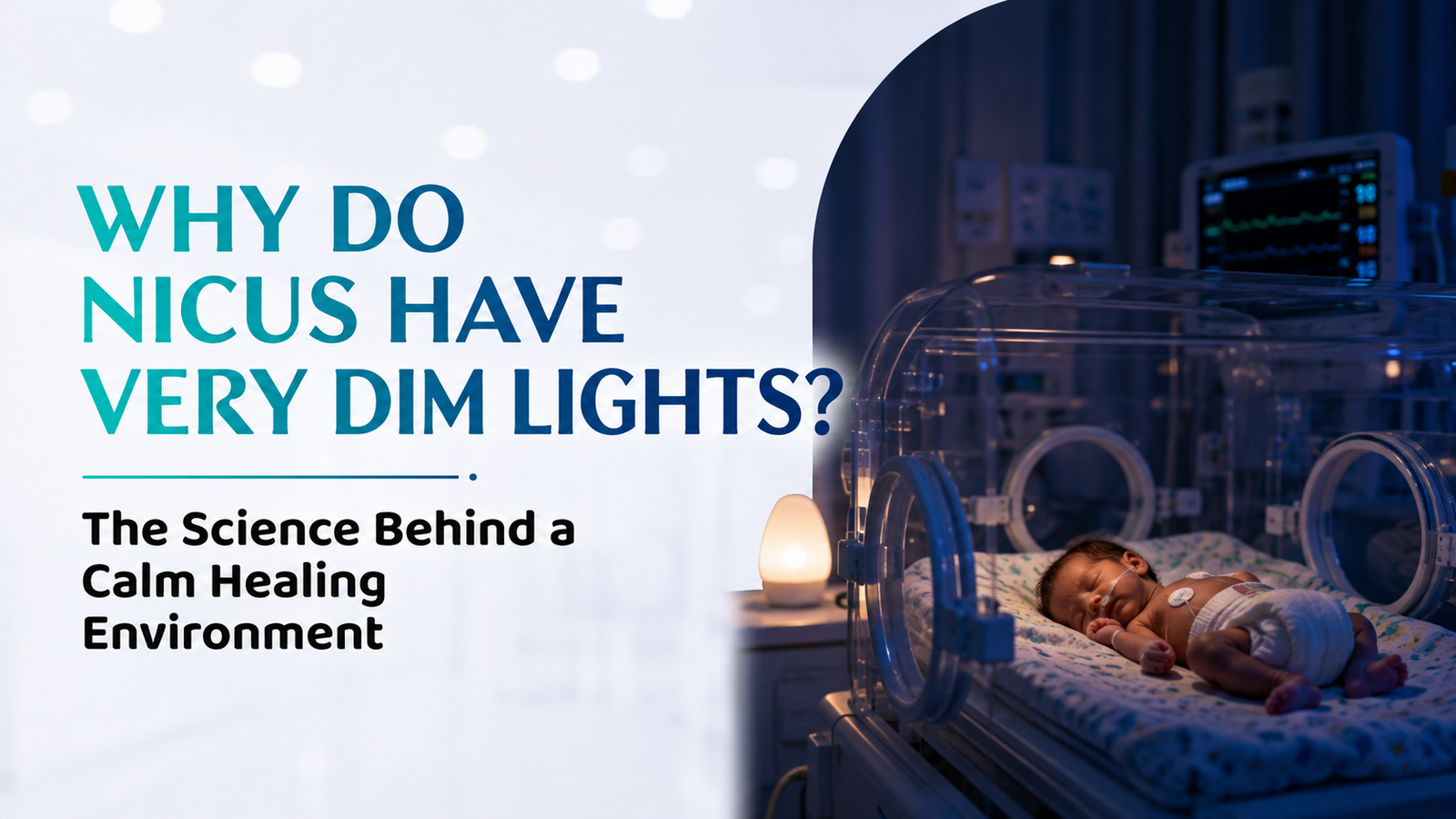
Have you ever walked into an NICU and wondered, “Why is it so dark in here?” Unlike most hospital wards, NICUs are intentionally kept softly lit. It’s not to create a quiet atmosphere or save electricity—it’s because light plays an important role in a newborn’s recovery. For premature and critically ill babies, something as simple as the brightness of a room can affect their sleep, stress levels, brain development, and overall healing.
If you’re a parent seeing your baby in the NICU for the first time, the dim lights might seem unusual. But once you understand the reason behind them, you’ll realize that every detail inside a NICU—from the lighting to the noise levels—is carefully designed with one goal: giving the tiniest patients the best possible environment to grow, heal, and thrive.
Imagine Leaving the Womb Too Early
Think about where your baby was supposed to be.
Inside the womb.
Warm.
Quiet.
Dark.
Protected.
Now imagine suddenly entering a world filled with bright lights, loud sounds, alarms, and constant activity.
That’s exactly what premature babies experience.
Their eyes, brain, and nervous system are still developing.
Too much light can become an unnecessary source of stress.
That’s why NICUs try to recreate an environment that’s as close as possible to the womb.
Why Are Premature Babies More Sensitive to Light?
A full-term baby’s body has had more time to develop.
But babies born too early have immature eyes and a developing nervous system.
Bright light can:
- Make babies uncomfortable
- Interrupt sleep
- Increase stress levels
- Affect heart rate and breathing
- Cause unnecessary stimulation
Since sleep plays a major role in brain development, protecting it becomes extremely important.
Sleep Is One of the Best Medicines
Adults recover better when they get enough sleep.
The same is true for newborns.
In fact, it’s even more important.
During sleep, babies:
- Grow faster
- Build stronger brains
- Conserve energy
- Improve healing
- Support immune function
- Develop healthy sleep patterns
Frequent exposure to bright lights can disturb this natural cycle.
A dim NICU helps babies rest peacefully.
It's Not Complete Darkness
Many parents worry,
“So, are babies kept in the dark all day?”
Not at all.
NICUs use controlled lighting.
Healthcare professionals still need enough light to safely examine babies, perform procedures, and monitor equipment.
Instead of bright overhead lighting all day, NICUs often use:
- Soft ambient lighting
- Adjustable examination lights
- Incubator covers (when appropriate)
- Day-night lighting cycles
The goal is balance—not darkness.
Light Affects More Than Just the Eyes
Research has shown that the NICU environment can influence a baby’s overall development.
Appropriate lighting may help support:
- Better sleep
- Reduced stress
- Stable heart rate
- Improved oxygen levels
- Healthy brain development
- Normal day-night rhythm over time
Every small adjustment contributes to creating an environment where babies can grow instead of constantly reacting to external stimulation.
Why Are Incubators Sometimes Covered?
Parents often notice blankets or specially designed covers placed over incubators.
This isn’t to hide the baby.
It’s to reduce excessive light exposure while maintaining the baby’s comfort.
The covers also help create a quieter, more womb-like environment.
Healthcare professionals remove or adjust them whenever they need to examine the baby or provide treatment.
The NICU Is Designed Around Developmental Care
Modern neonatal care isn’t only about treating illness.
It’s also about supporting healthy development.
This approach is known as developmental care.
It includes:
- Gentle handling
- Reduced noise
- Dim lighting
- Comfortable positioning
- Skin-to-skin care when possible
- Protecting sleep
Together, these practices help reduce stress and support the baby’s growing brain.
Parents Often Wonder...
“If my baby needs treatment, why does the room have to be quiet and dim?”
Because healing isn’t only about medicines and machines.
The environment matters too.
Think about recovering from an illness yourself.
Would you recover better in a noisy, brightly lit room with constant interruptions…
Or somewhere peaceful where you could truly rest?
Babies deserve that same opportunity.
Can Parents Help?
Absolutely.
Parents are an important part of the healing environment.
You can help by:
- Speaking softly
- Avoiding sudden loud noises
- Keeping mobile phones on silent
- Following NICU visiting guidelines
- Practising Kangaroo Mother Care when advised
- Allowing your baby uninterrupted sleep whenever possible
Even these small actions can make a meaningful difference.
More Than Just Comfort—It's Evidence-Based Care
The use of controlled lighting isn’t simply a preference.
It is part of evidence-based neonatal care practiced in advanced NICUs worldwide.
Along with expert nursing, continuous monitoring, infection prevention, and developmental care, a calm environment supports better outcomes for vulnerable newborns.
Every detail inside a NICU has a purpose—even the lighting.
The Vrundavan Approach
At Vrundavan Newborn & Childcare Centre, every aspect of the NICU environment is thoughtfully planned to support the needs of premature and critically ill newborns.
From advanced neonatal technology to developmental care practices like controlled lighting, gentle handling, and continuous monitoring, the focus remains on helping every baby heal in the safest and most supportive environment possible.
Final Thoughts
When parents first enter a NICU, the dim lighting may seem surprising.
But after understanding why it’s there, many see it differently.
Those softer lights aren’t a sign that something is missing.
They’re a sign that every detail has been carefully designed for the tiniest patients.
Sometimes, helping a baby grow isn’t about doing more.
Sometimes, it’s about creating the quiet, peaceful environment they were always meant to have.
Frequently Asked Questions (FAQs)
1. Why are NICUs dimly lit?
Dim lighting helps reduce stress, supports better sleep, protects developing eyes, and creates a more womb-like environment for premature and critically ill babies.
2. Is dim lighting safe for babies?
Yes. Healthcare professionals use controlled lighting that allows safe medical care while protecting babies from excessive stimulation.
3. Do all babies in the NICU need low lighting?
The lighting is adjusted based on each baby’s condition, gestational age, and medical needs.
4. Why are incubators covered?
Incubator covers help reduce unnecessary light exposure, improve sleep, and create a calm healing environment.
5. Does lighting really affect recovery?
Research suggests that an appropriate NICU environment—including controlled lighting—supports better sleep, reduced stress, and healthy development.